The Unveiling
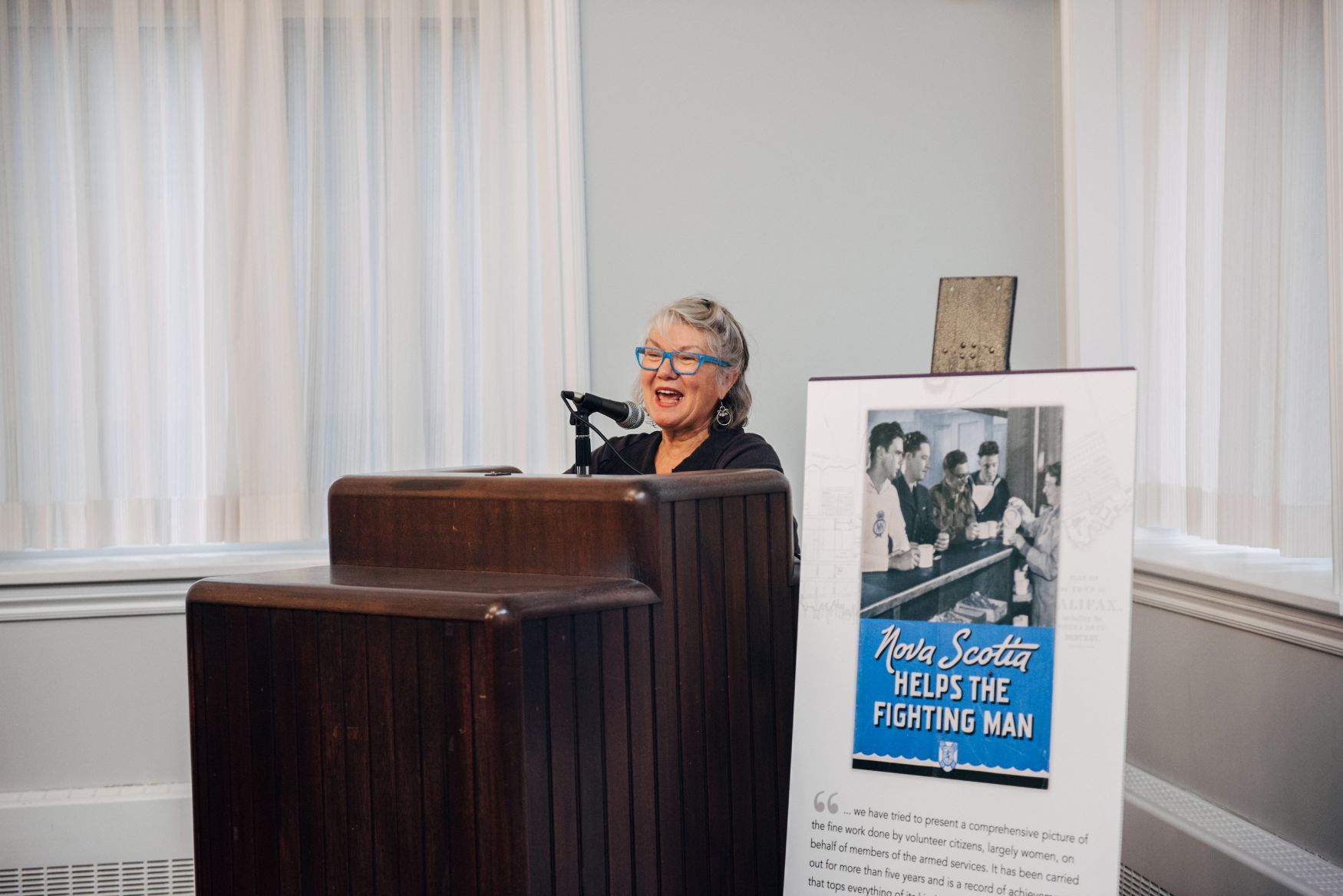
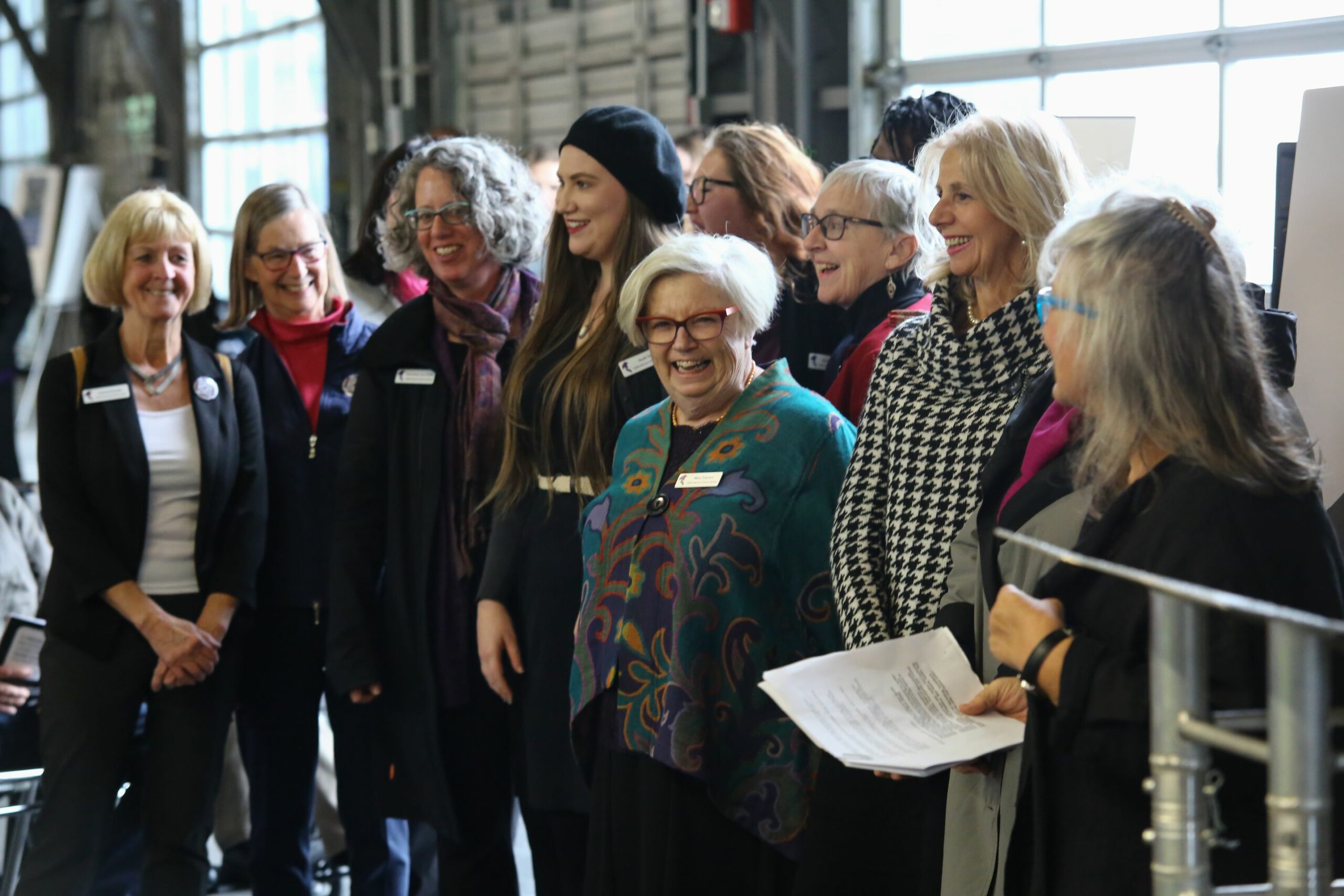
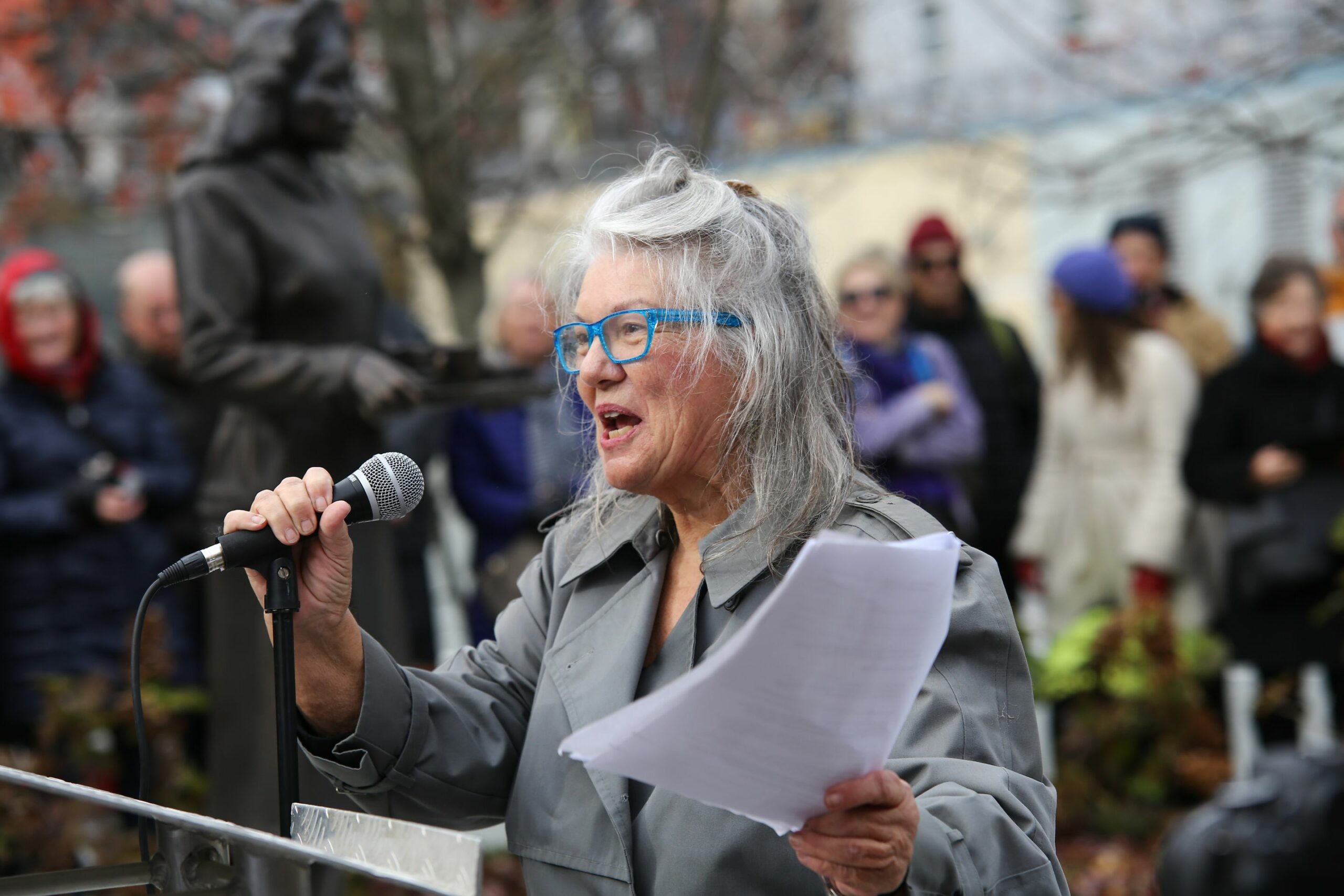
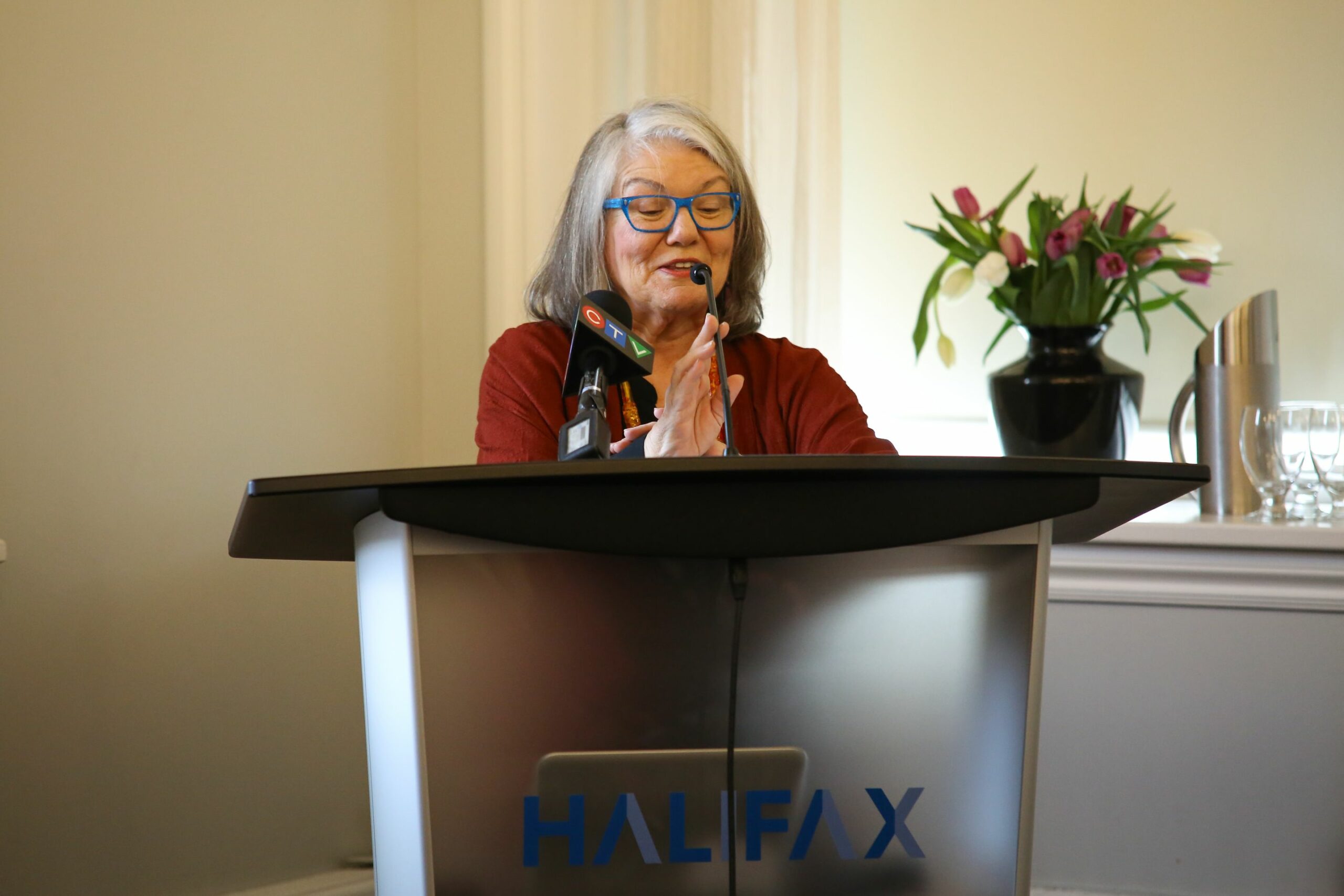
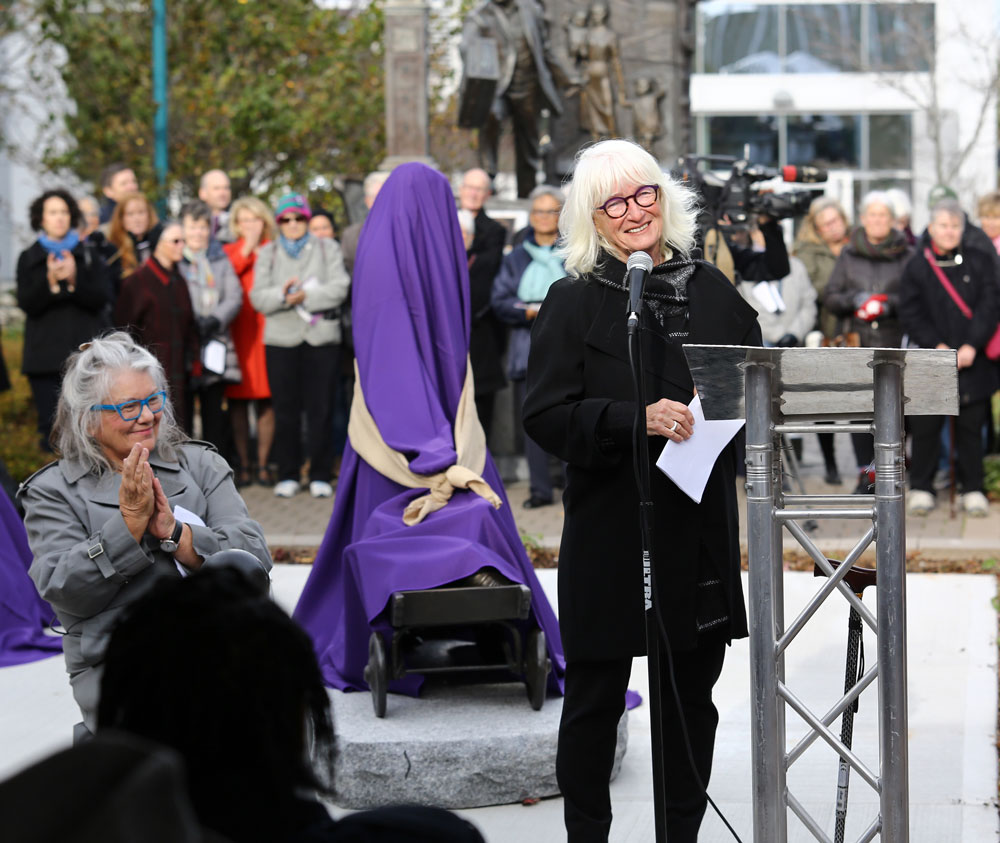
Wanda Lewis, Halifax Women’s History Society member
Watch the Unveiling
Society Breaks the Bronze Ceiling in Halifax
Photos by Bruce Bottomley
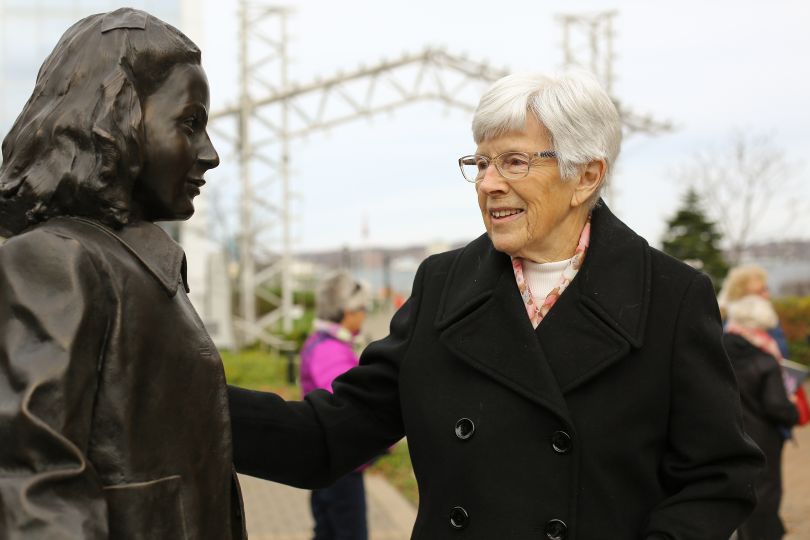
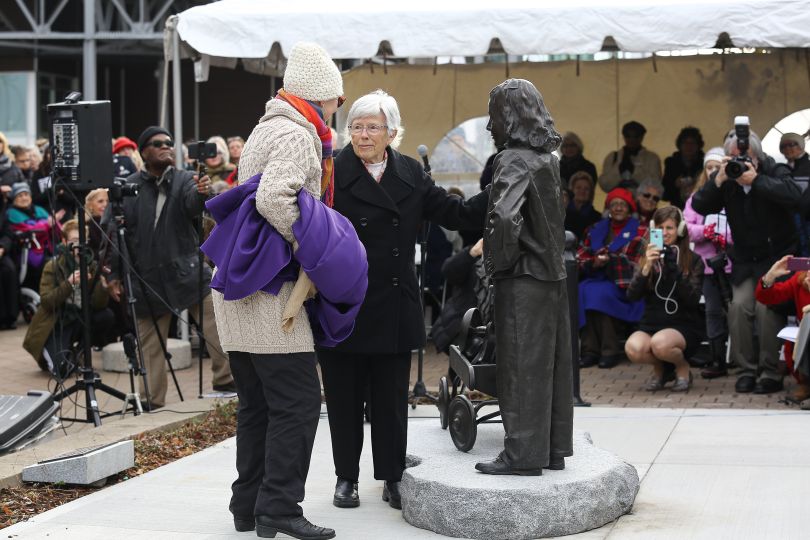
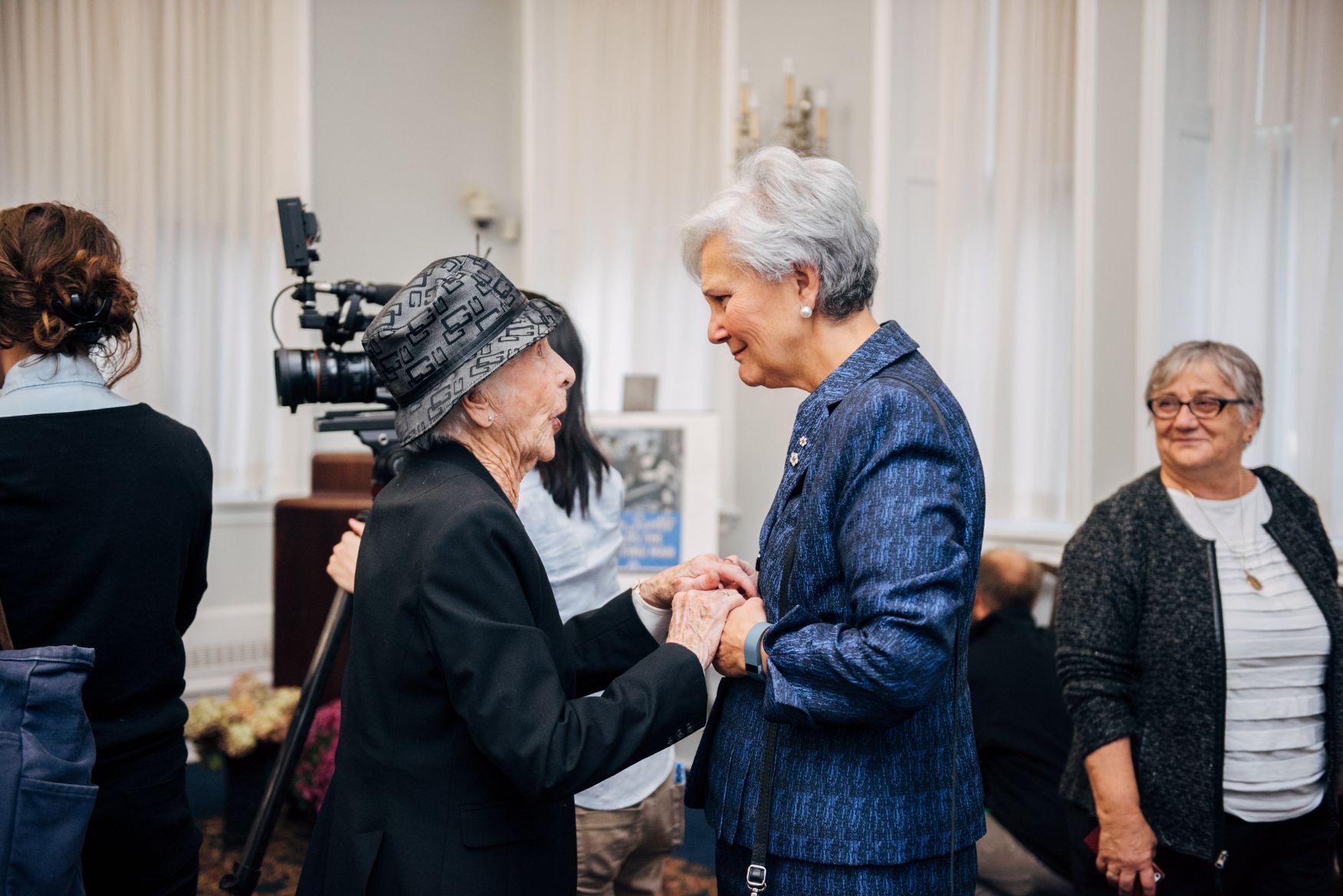
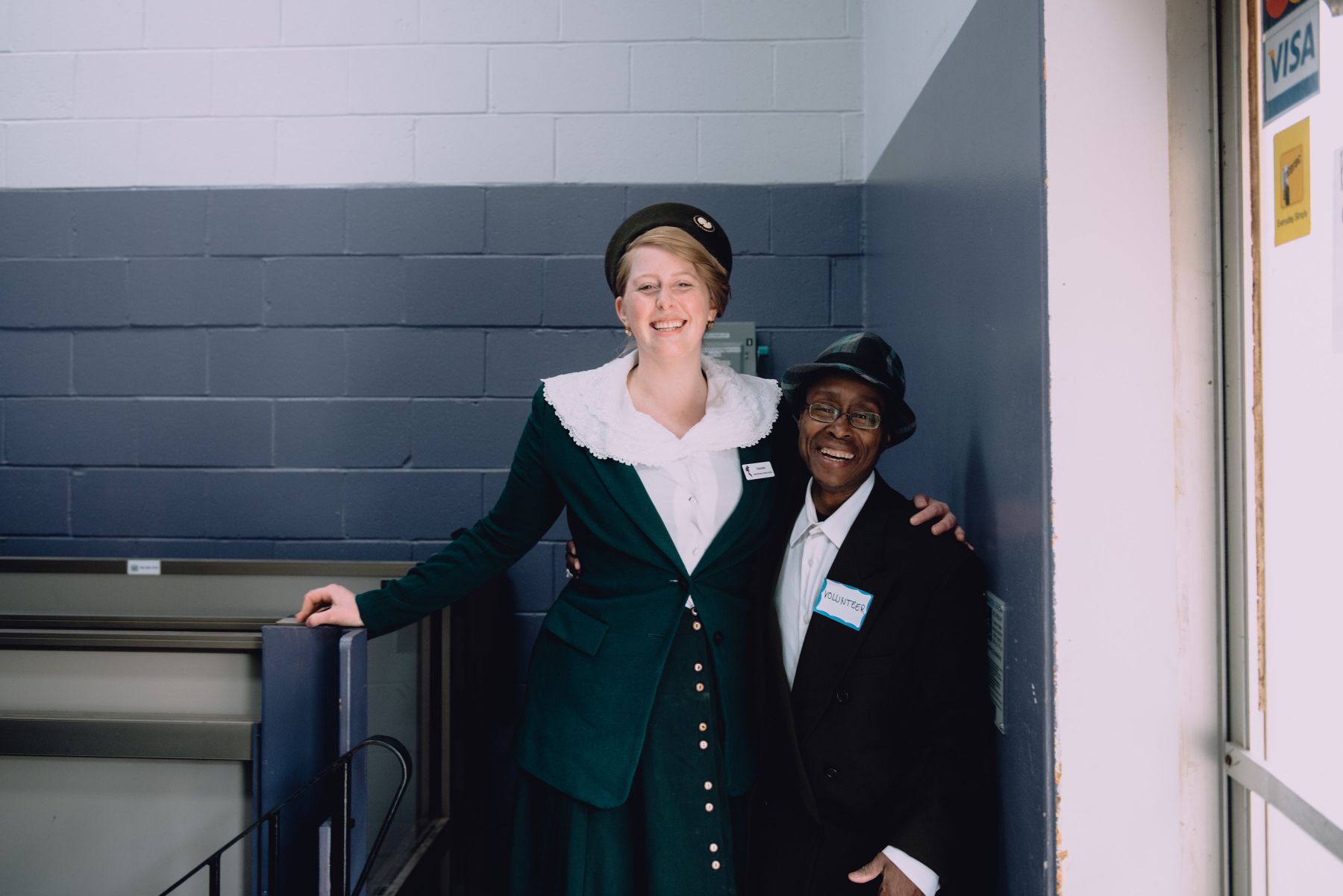
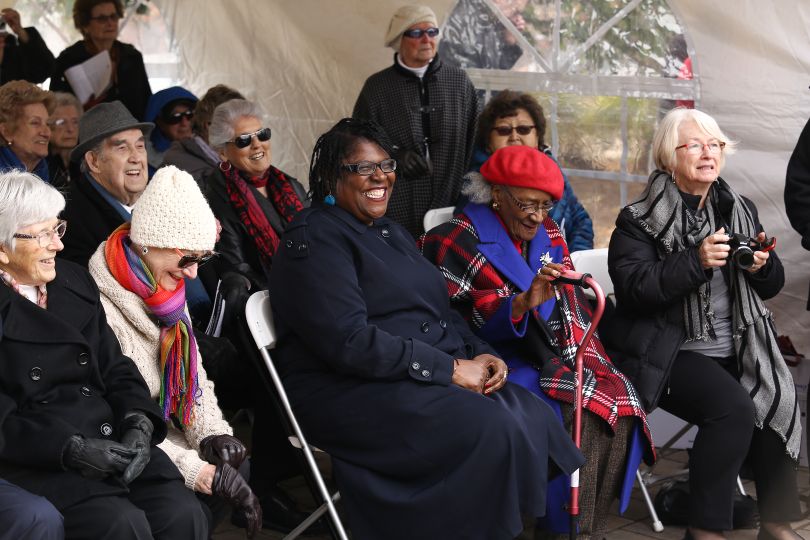
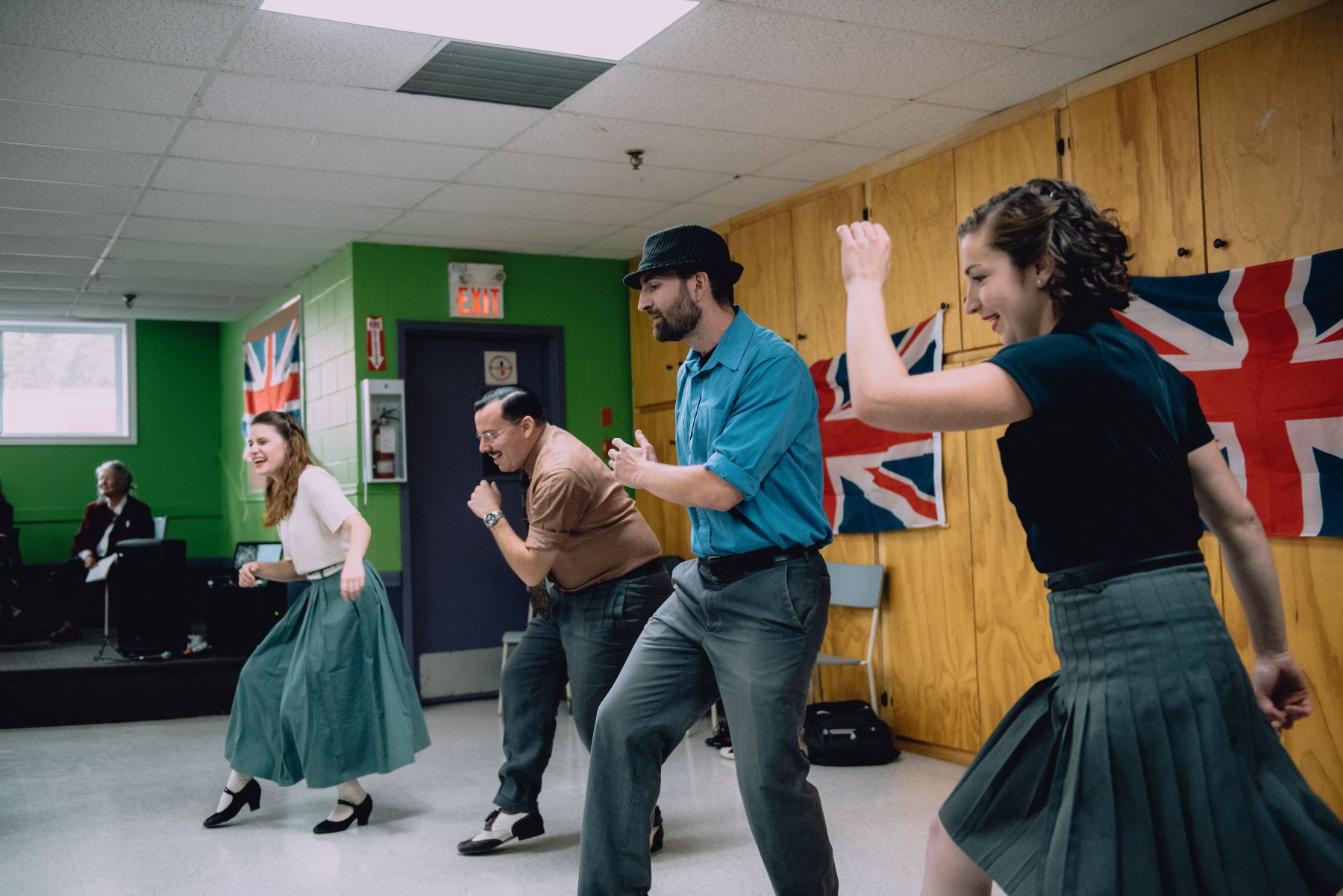
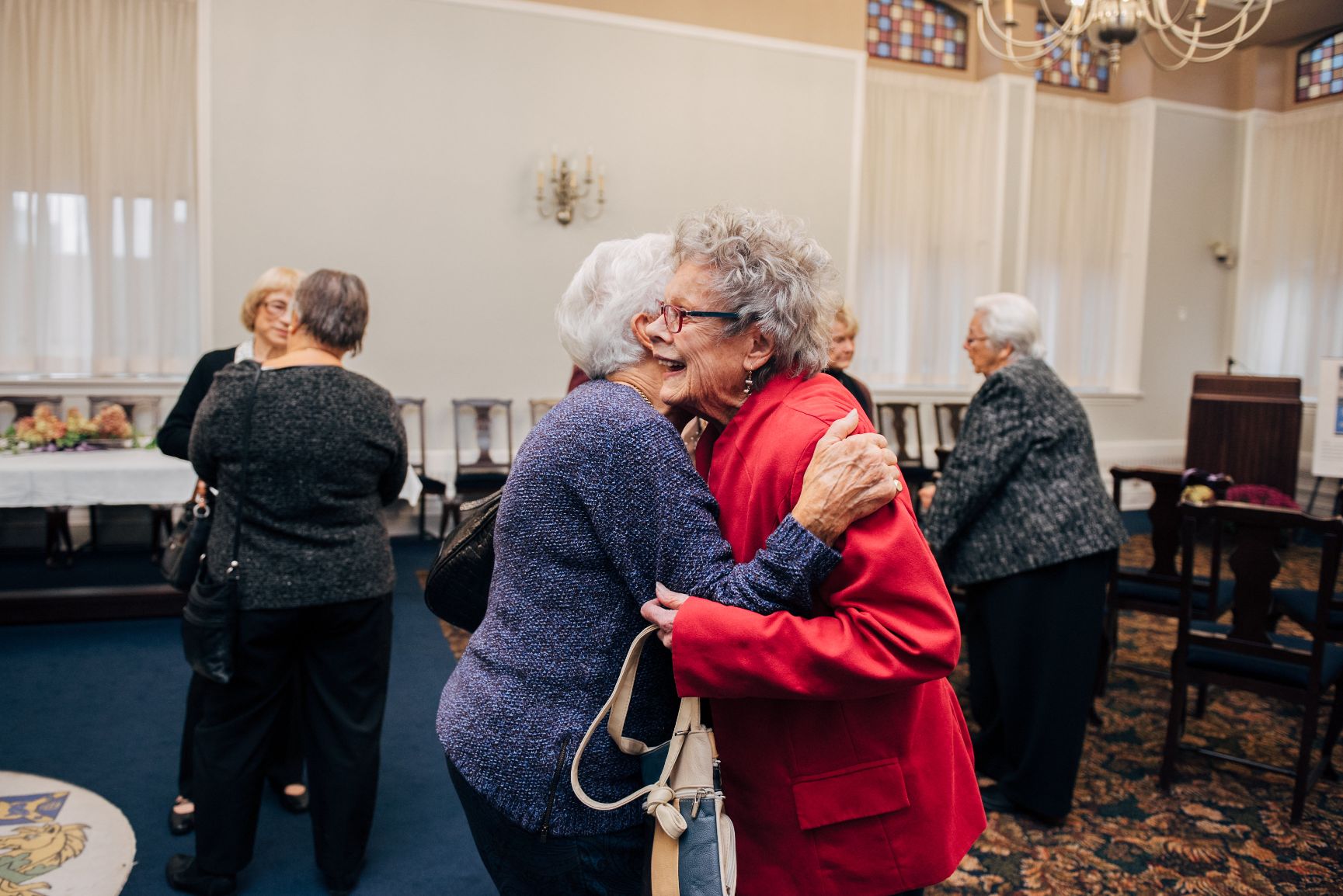
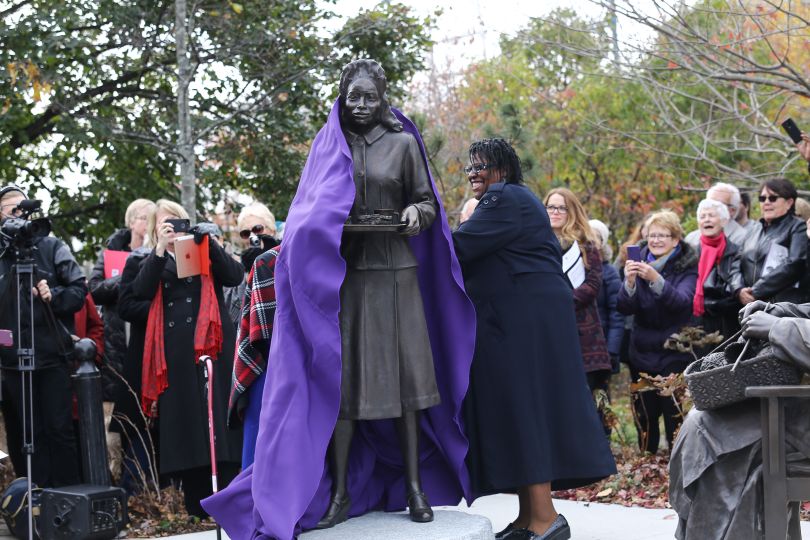
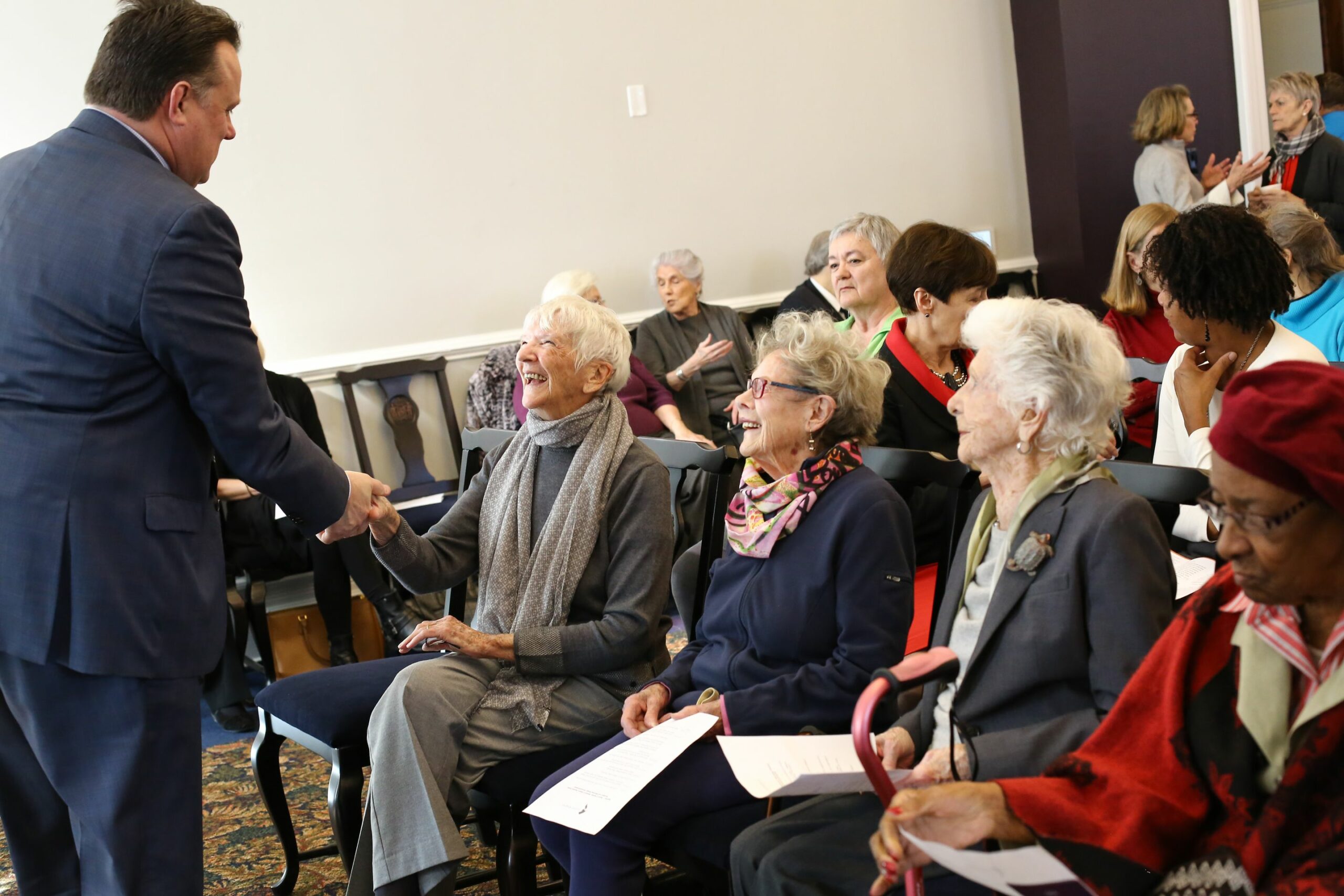
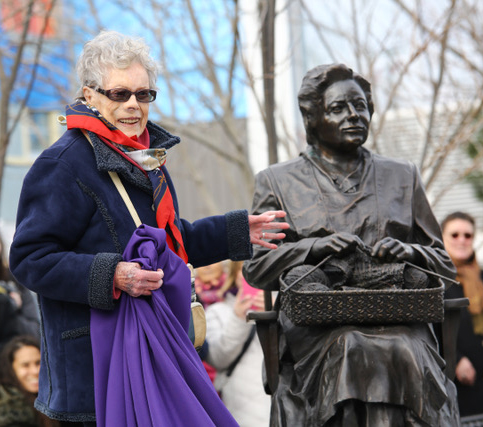
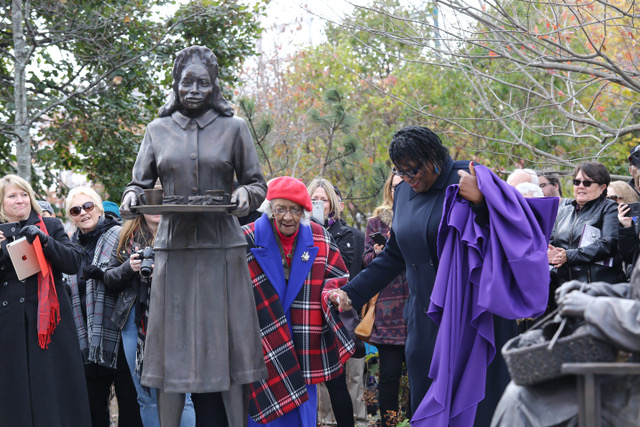
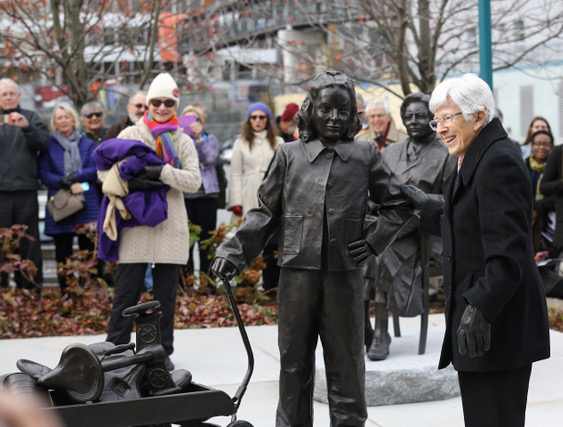
Hundreds of people gathered on the Halifax waterfront on Thursday, Nov. 16, 2017 to be part of the unveiling of the monument, The Volunteers/Les Bénévoles. This was an historic event — the first full-sized bronze monument to honor women in Halifax’s history.
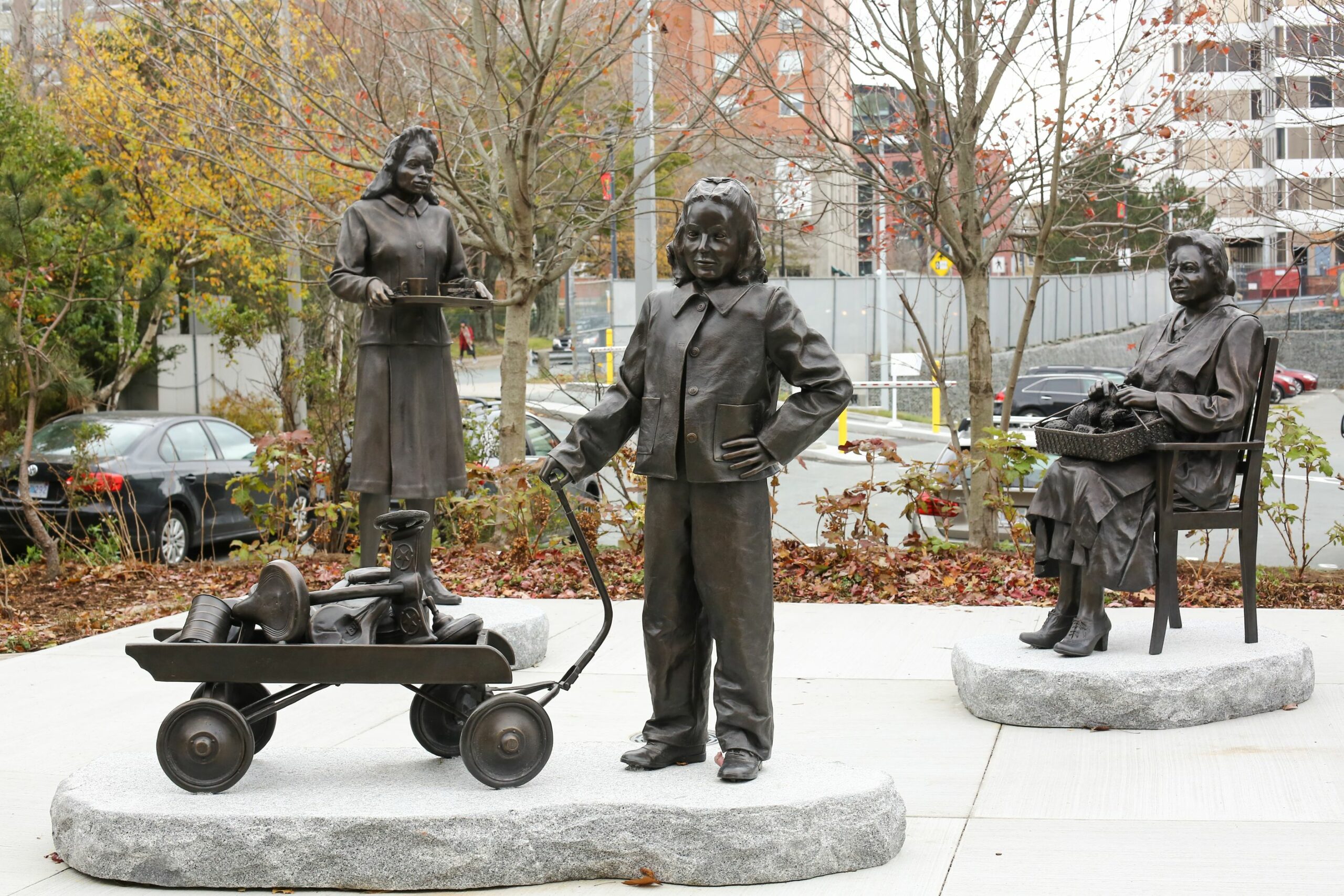
The monument, the project of the Halifax Women’s History Society, is comprised of three figures, representing three generations: A young girl pulling a wagon full of salvaged metal, an African-Nova Scotian woman holding a tray of coffee and sandwiches, and an older woman seated with a Mi’kmaq basket and knitting. Read more about the monument design here.
Public art is art in public spaces and it depicts the history of its place and people. The Society began because it was aware of the absence of any statutes or monuments depicting actual women in Halifax.
“This is the first monument to women in the city’s 268-year history,” said Society Chair Janet Guildford. “We’re elated to be the first to break the bronze ceiling in Halifax. History matters in public culture. We sincerely hope others who have been rendered invisible and irrelevant in public art follow us.”
The monument is also the first to feature an African-Nova Scotian woman. The original idea was to have one statute of a woman. As the project evolved, the Society decided to have three figures to span the generations and be inclusive — an older woman, the African Nova Scotian woman and a young girl.
The Halifax Port Authority provided the land for The Volunteers/Les Bénévoles. It’s located just north of the Halifax Seaport Farmers’ Market and next to the monument The Emigrant.
The Society raised about $600,000 dollars from many generous sponsors. They all made the monument a reality.
The Monument Design
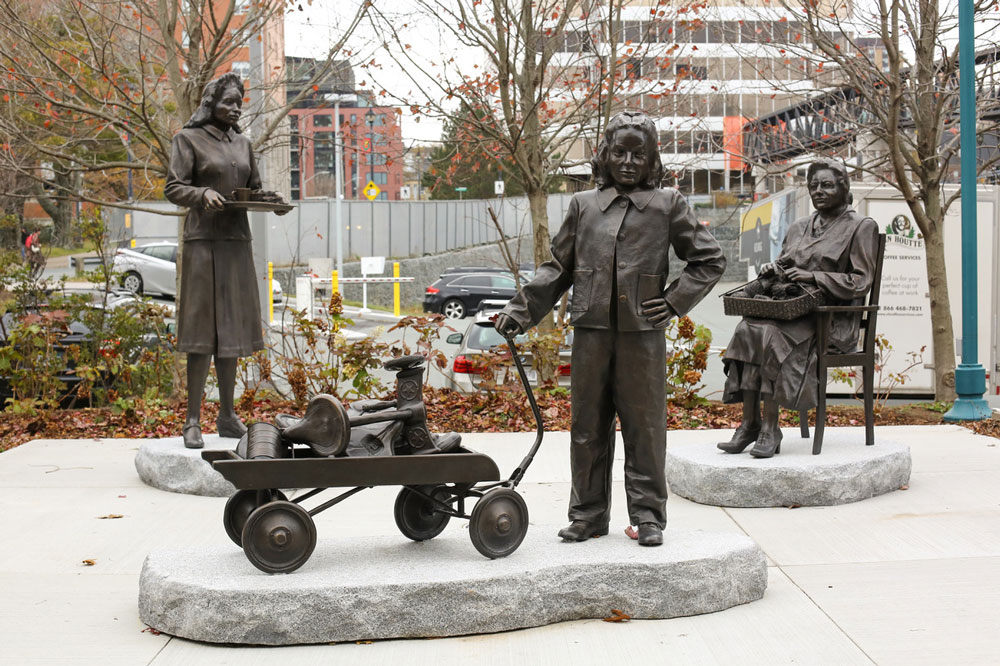
The Design for The Volunteers/Les Bénévoles
Photos: Bruce Bottomley
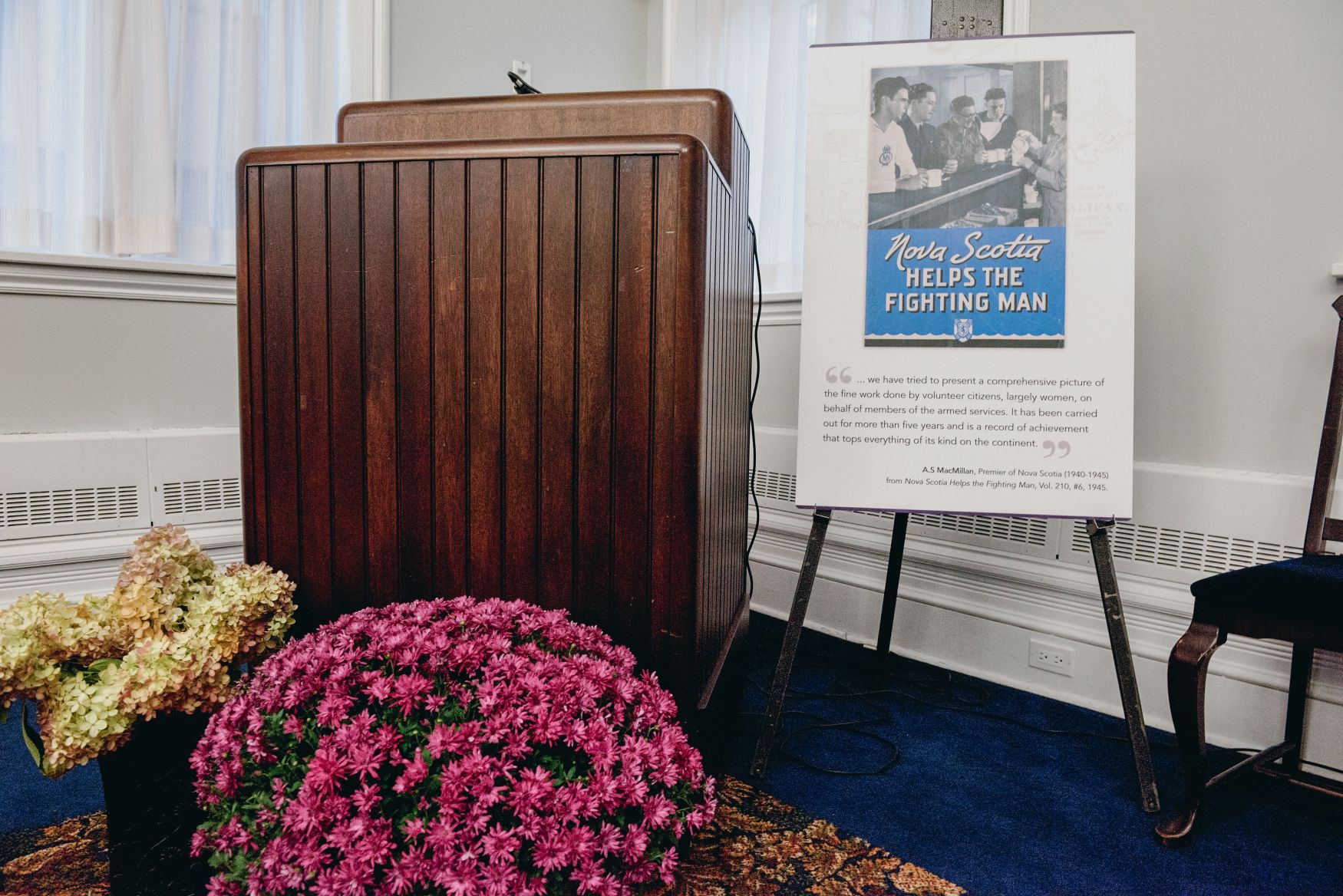
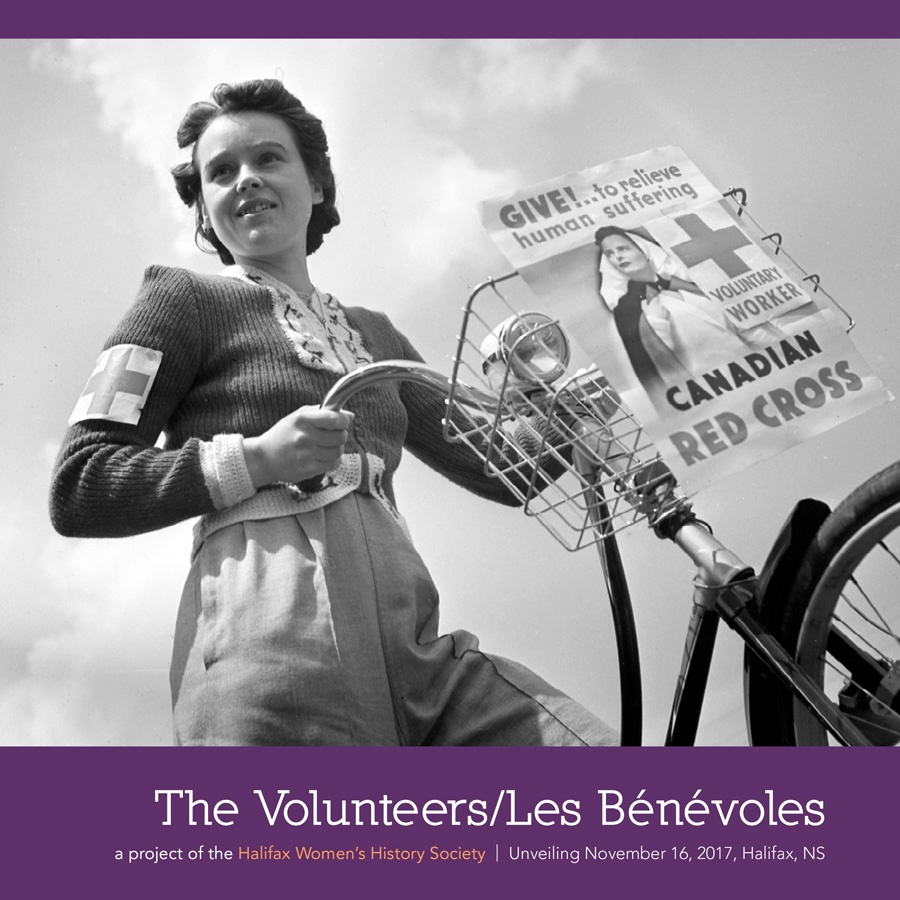
The Volunteers/Les Bénévoles is the first monument with full-sized bronze figures of women in Halifax’s history. It honors the work of thousands of women who volunteered during the Second World War. They have never been honored, but their work was extensive, varied and vital. Read about their story here.
The design, by well-known Canadian artist Marlene Hilton Moore was chosen in a national competition.
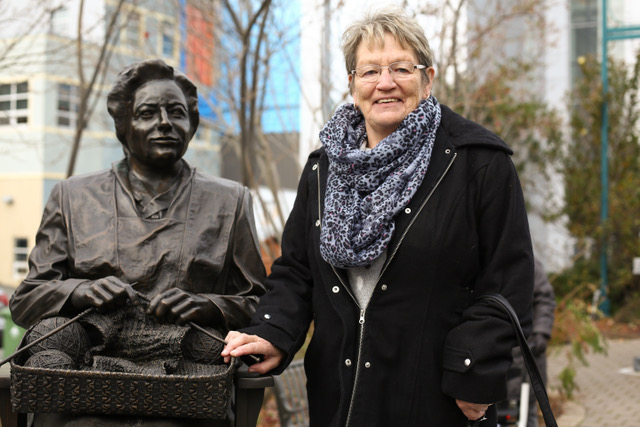
The three figures represent — an African Nova Scotia canteen worker with her tray (far left), an older woman with her Mi’kmaw basket containing knitting (far right) and a young girl with her wagon piled with salvage items (foreground).
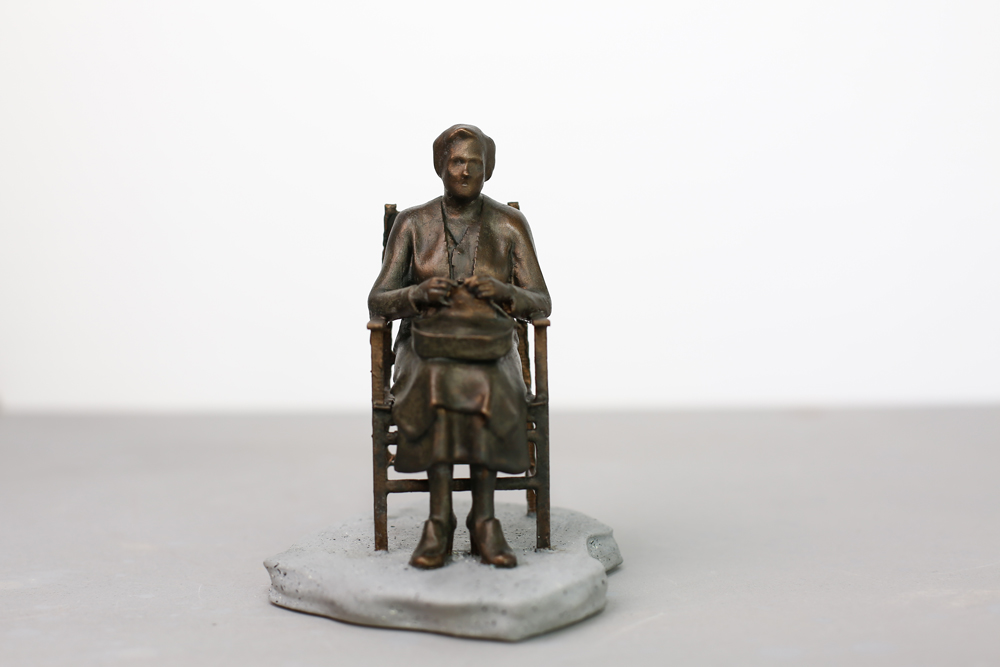
Woman with Knitting
Hundreds of thousands of women supported the troops by knitting massive quantities of socks, caps, sweaters and other badly- needed comfort items. The Canadian Red Cross estimates that 750,000 volunteers knit 50 million articles during the Second World War.
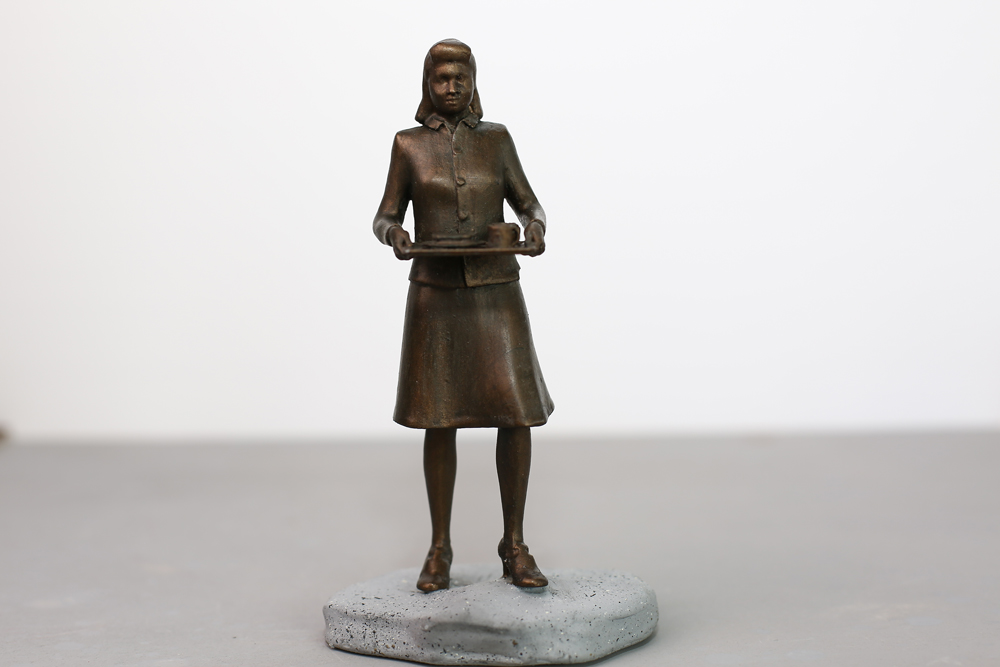
African Nova Scotian Woman
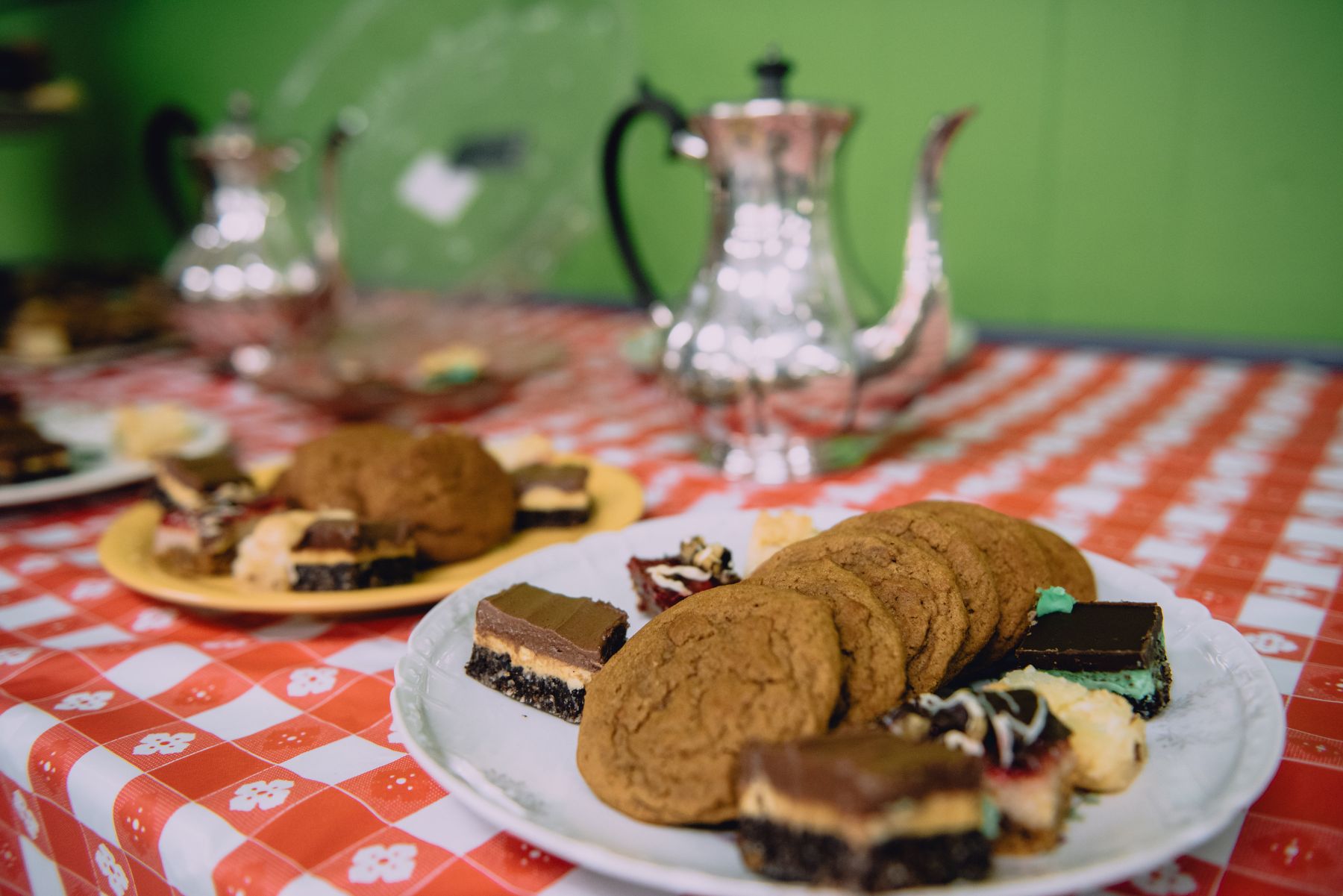
Women fed more than 100,000 servicemen who passed through Halifax on their way to the war in Europe. Meals were one of the most important services women provided. The woman figure is helping serve meals to black servicemen. Canteens and clubs were segregated.
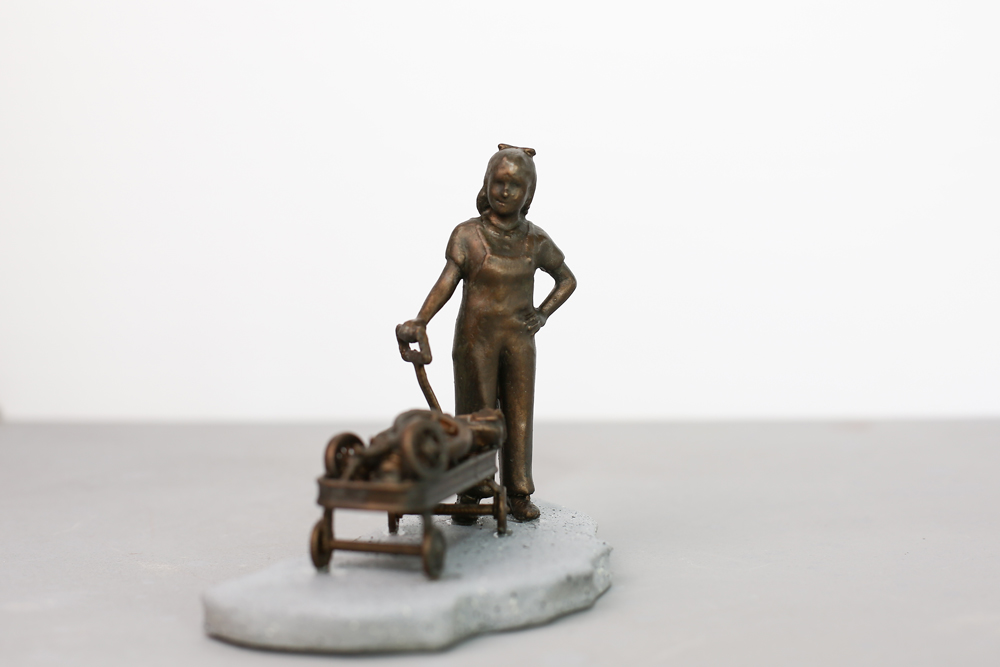
Young Girl with Wagon
Children were part of the volunteer war effort. The young girl is part of a salvage drive and is hauling her wagon full of pots, pans and broken toys. The Federal Government encouraged Canadians to salvage materials for conversion into airplanes, tanks and other weapons.
Fundraising
Thank you to those who contributed the money that made The Volunteers/Les Bénévoles, possible.
In addition to the generous support from the private, corporate and government sponsors listed below, we wish to acknowledge our thanks to the many donors from within the Halifax Women’s History Society membership as well as interested citizens from across Canada.
- Marjorie A. Lindsay
- The Honourable Margaret Norrie McCain, C.C., O.N.B.
- The Honourable Nancy Ruth, C.M.
- Louise Abraham-Pace
- CN
- Scotiabank
- Halifax Foundation
- Halifax Regional Municipality
- Government of Nova Scotia
- The Atlantic Canada Opportunities Agency/Agence de promotion économique du Canada

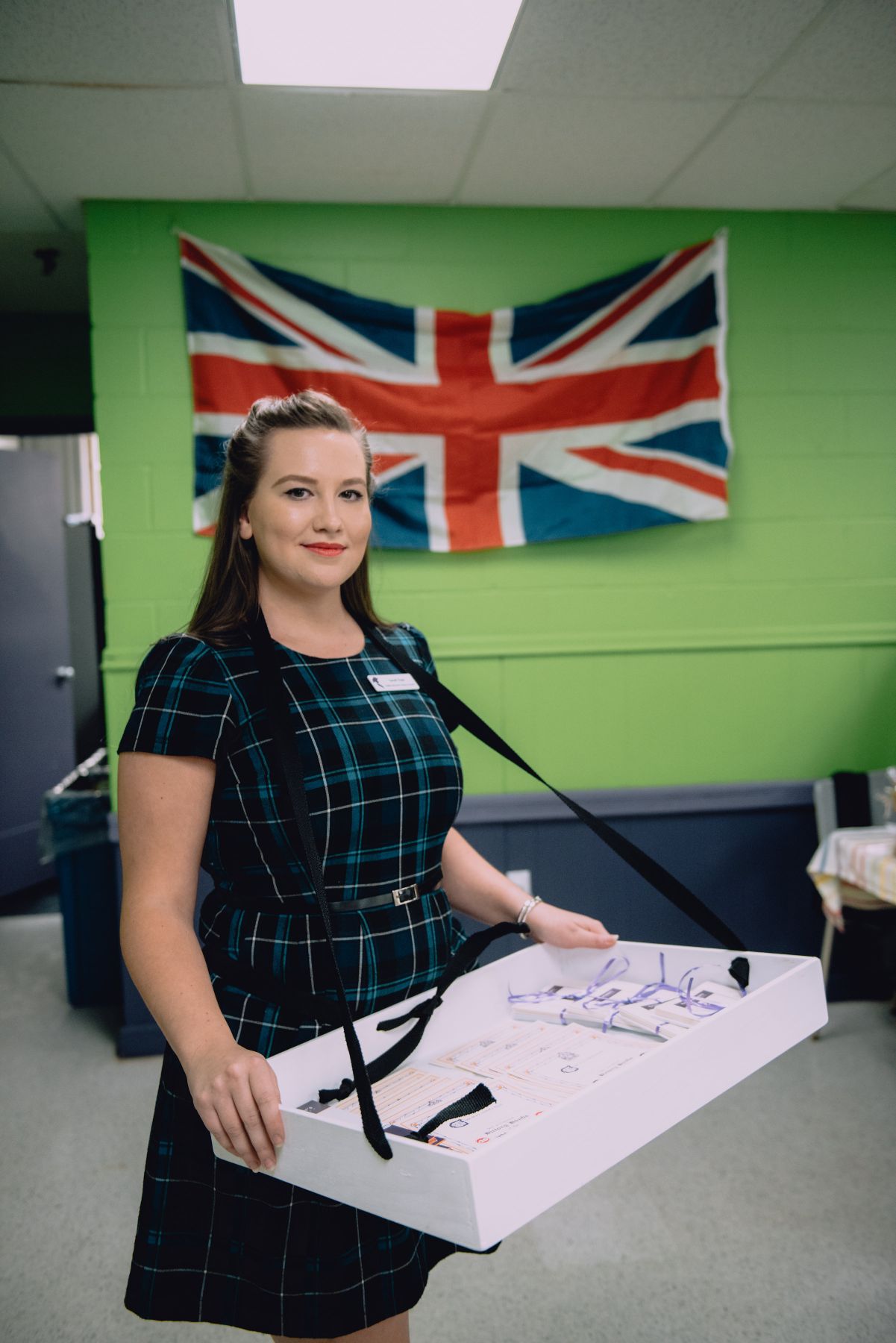
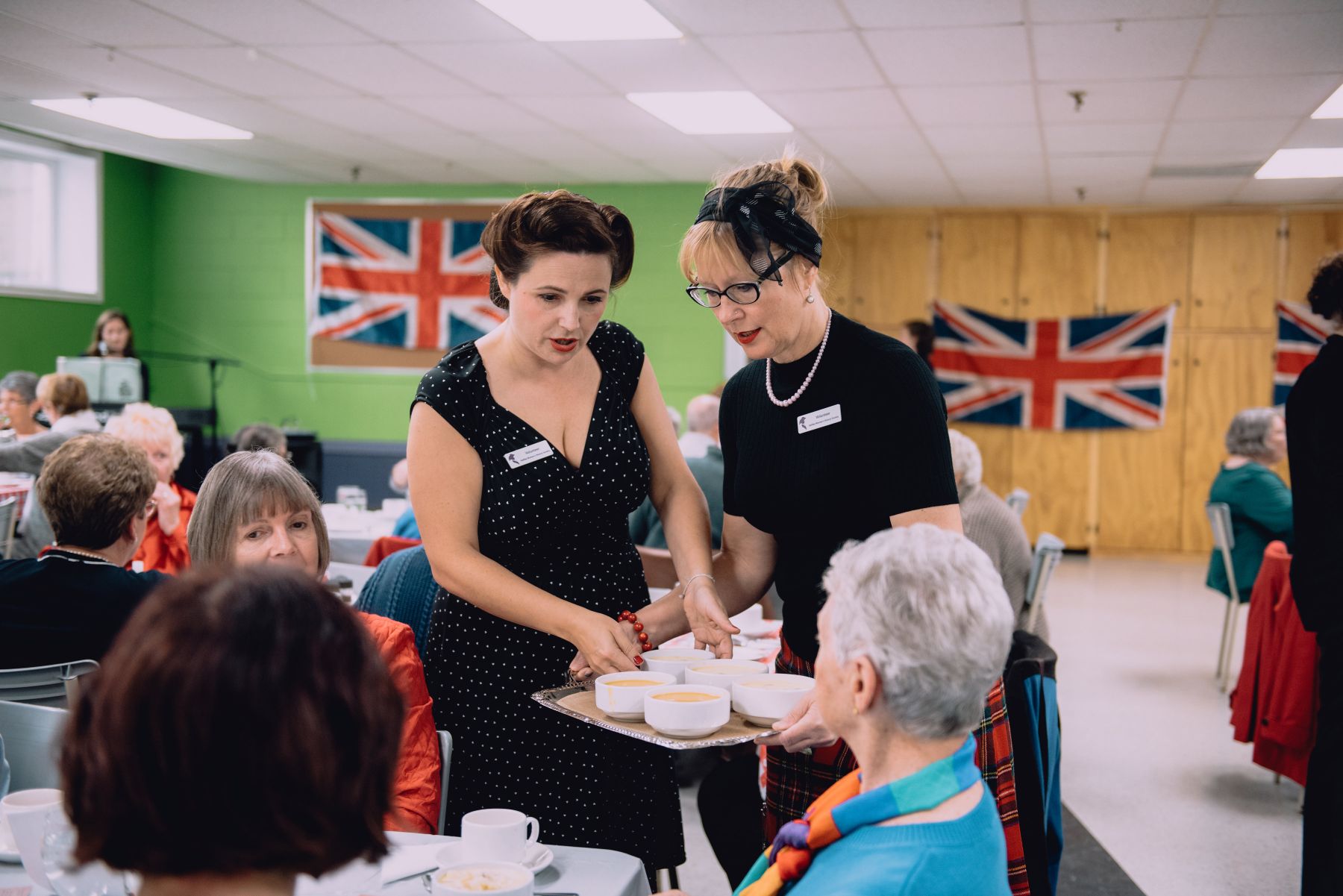
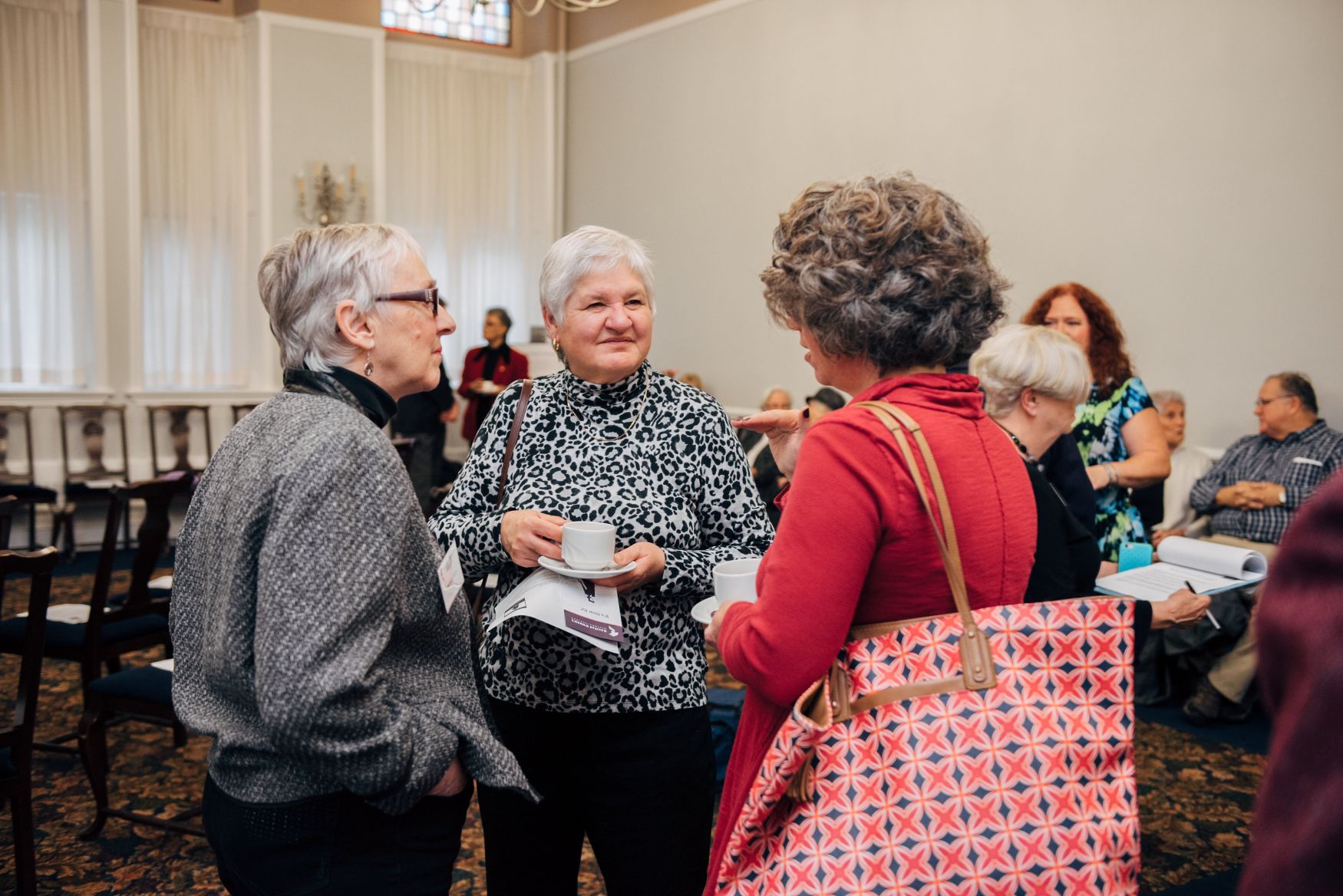
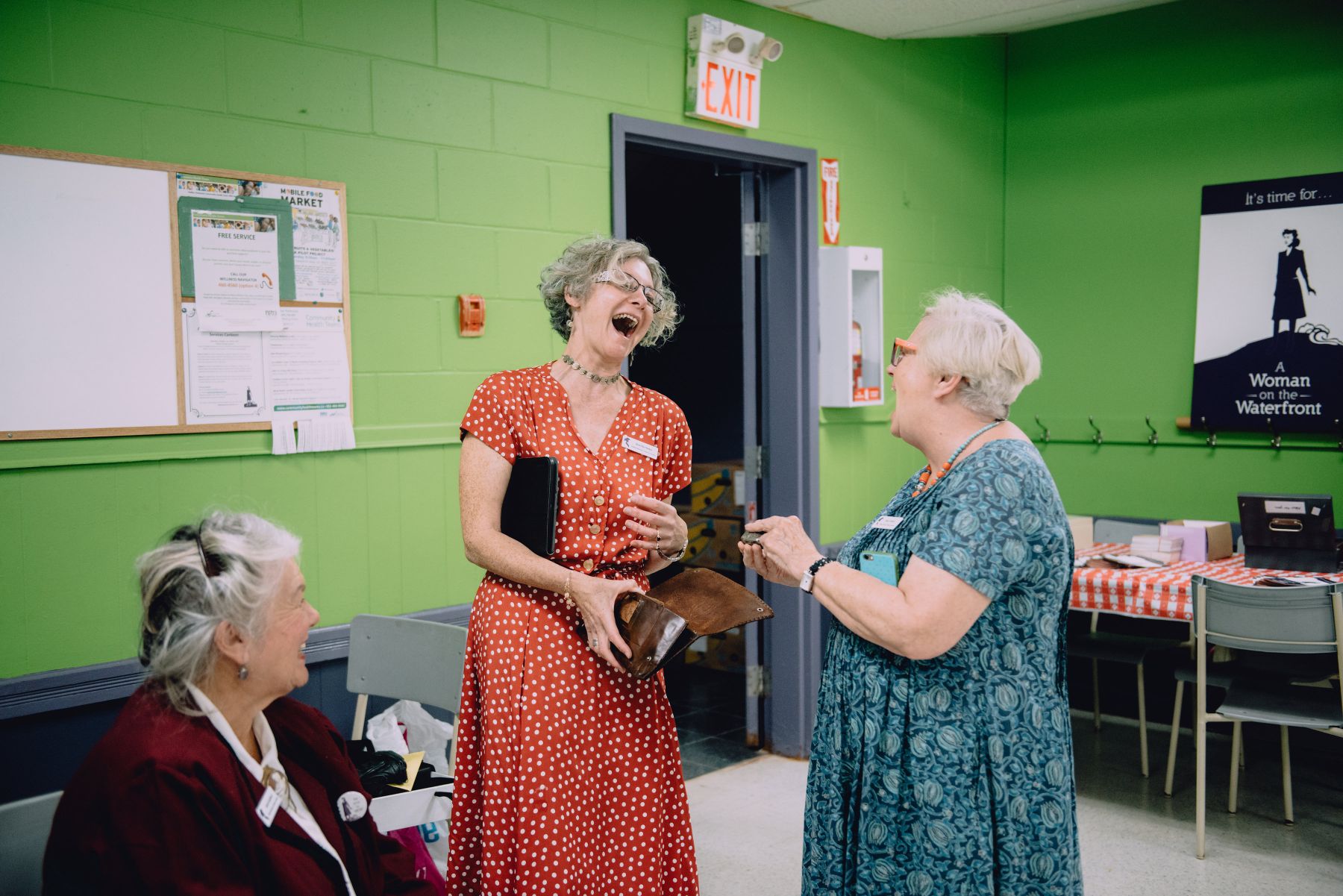
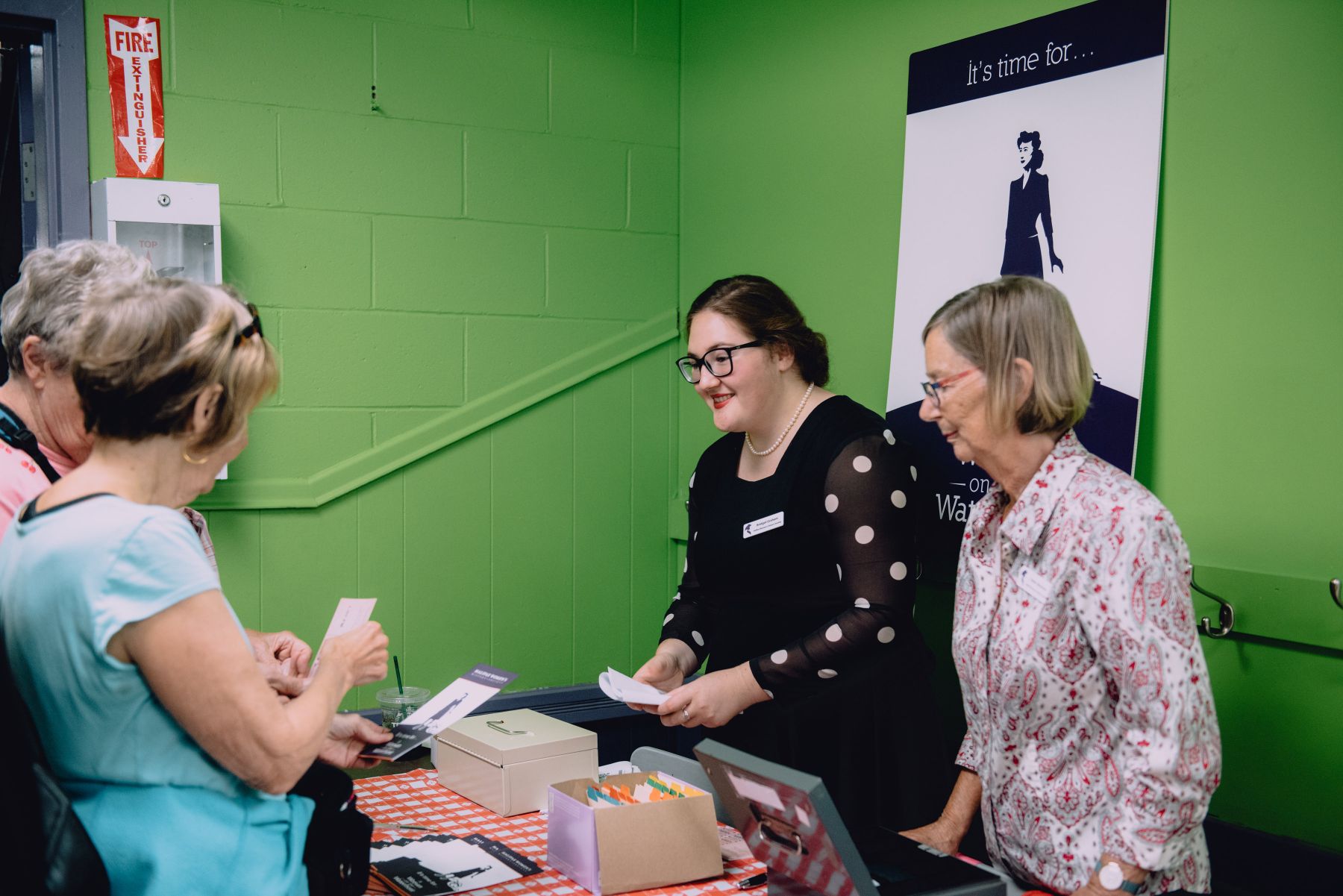
Fundraising events for Woman on the Waterfront